
TPS25830QCWRHBRQ1

Texas Instruments
595-PS25830QCWRHBRQ1
TPS25830QCWRHBRQ1

Fabricante:

Descripción:
USB Interface IC USB Type-C® and SDP/CDP charge port

Modelo ECAD:
Descargue Library Loader gratis para convertir este archivo para su herramienta ECAD. Conozca más sobre el modelo ECAD.
Mouser actualmente no vende este producto en su región.

Disponibilidad

Existencias:

Atributo del producto Valor de atributo Seleccionar atributo
Texas Instruments
Categoría de producto: Interfaz IC USB
Restricción de entrega:
 Mouser actualmente no vende este producto en su región.
RoHS:  
TPS25830
USB Chargers
USB Type-C
SMD/SMT
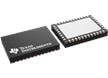
VQFN-32
4.5 V
36 V
- 40 C
+ 125 C
Reel
Cut Tape
MouseReel
Marca: Texas Instruments
País de ensamblaje: Not Available
País de difusión: Not Available
País de origen: CN
Protección ESD: 15 kV
Tipo de interfaz: USB
Sensibles a la humedad: Yes
Número de puertos: 1 Port
Tipo de producto: USB Interface IC
Cantidad de empaque de fábrica: 5000
Subcategoría: Interface ICs
Productos encontrados:
Para mostrar productos similares, seleccione al menos una casilla de verificación
Seleccione al menos una de las casillas de verificación anteriores para mostrar productos similares en esta categoría.
Atributos seleccionados: 0

Esta funcionalidad requiere que JavaScript esté habilitado.

CAHTS:
8542390000
USHTS:
8542390070
MXHTS:
8542399999
ECCN:
EAR99

TPS2583x-Q1 USB Charging Port Controllers

Texas Instruments TPS2583x-Q1 USB Type-C™ and BC1.2 Charging Port Controllers include a synchronous DC/DC converter. With cable droop compensation, the VBUS voltage remains constant regardless of load current. This feature ensures that connected portable devices are charged at optimal current and voltage. The TPS25832-Q1 includes high bandwidth analog switches for DP and DM pass-through switching. The TPS25833-Q1 series includes a thermistor input pin and a thermal warning flag for user-programmable thermal overload protection. The synchronous buck regulators operate with current-mode control and are internally compensated to simplify the design. A resistor on the RT pin sets the switching frequency between 300kHz and 2.2MHz. When the devices operate below 400kHz, it results in better system efficiency. Operation above 2.1MHz avoids the AM radio bands and enables the use of a smaller inductor.